
Beyond Massage
“Any mirror or photograph would reveal that a great many problems are matters of structure, of physics – of a three-dimensional body fitting very badly into a greater material universe…” Ida P. Rolf
Movement evaluation and Posture Analysis is a crucial part of going from massage therapy to the next level.
Technique is the backbone of the massage industry. All therapists were taught a variety of different techniques to try and get certain outcomes. These techniques are usually based in the foundation of elongating muscle and softening tension.
In 2005 I started studying movement as much as massage realizing that the patterns of how a person moves and creates stability (standing at rest) caused reoccurring patterns and people would get stuck in always feeling the same. That needed to change.
Movement Evaluation and Postural Assessment give us the what, why, and where to apply all the different techniques that have been taught to us. Seeing how someone stands, walks, moves in certain directions, all play a role in understanding what we need to do during that session to help.
This tool set is the backbone to success so you truly getting past the current state of how you feel.
As a result of studying movement I learned a wide variety of exercises and stretches to help you maintain all gains you got during your hands on session and continue to progress to physical freedom.
We call these stretches and exercises, homework. This homework is a game changer in keeping you in a good place and allowing you to continue to feel better more regularly and be less reliant on Chiropractors, doctors, and even me.
Postural Analysis
Proper analysis and assessment of a client’s condition is critical for ensuring they receive the best possible therapy.
Over the last 50 years or more, bodywork and its related hands-on fields have experienced substantial growth in the realm of new techniques and methodologies.
As each method has its claim to fame for what it can do, some are often more suited for particular conditions, and may not match what some clients may need. However, with so many techniques available, how can a therapist know what procedure best meets the needs of a client?
For the therapists here at Hands On Healing, postural analysis has proven to be the most efficient and non-invasive assessment tool available.
This tool enables our therapists to gather a plethora of information about a client, just by looking at their physical structure.
Some of the smallest imbalances (and plenty of more significant issues) in the way someone walks or stands become highly evident to the trained eye, and help establish a base for creating and modifying treatment plans to ensure maximum results.
Benefits of Postural Analysis
Another benefit of postural analysis is that it molds the session and techniques around the client’s needs. Each client receives their own uniquely designed treatment session, helping break the habit of “cookie cutter” bodywork that often leaves a client wanting for more.
“Before & After” Comparison
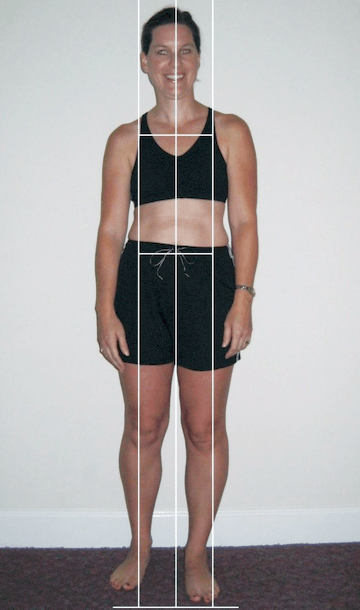
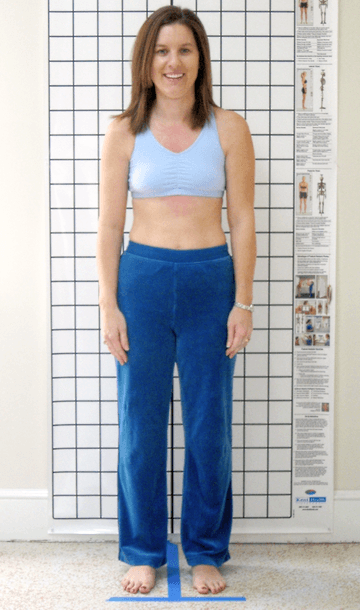
In many cases, photos are taken for “before and after” comparisons, much like the photograph in Figure 1.
These pictures help show the discernible change in someone’s body, as well as solidify for clients the changes they may feel in their bodies.
Postural Assessment for Extended Relief
A postural analysis is one of the most reliable and useful tools therapists have at their disposal.
As simple as it may seem, assessing one’s posture often makes the difference between a client experiencing three DAYS of relief as opposed to three WEEKS.
We encourage you to contact Hands On Healing and speak with one of our therapeutic massage providers about having your posture analyzed so we can discover what might otherwise go unnoticed.